
Purposeful Moments at Browning
The week before our Thanksgiving break, boys in the Middle School led a fundraising campaign to help aid Jamaica after the damage of Hurricane Melissa. There is a special kind of enthusiasm that our guys bring to such efforts: They set up their table in our 62 lobby, and every passerby gets an earnest solicitation asking for support. There’s nothing quite like seeing a Middle School boy urge a peer to contribute to a worthy cause—”Come on, I know your parents give you an allowance!”—but their directness speaks to the seriousness and emotional investment that the boys bring to their endeavor.
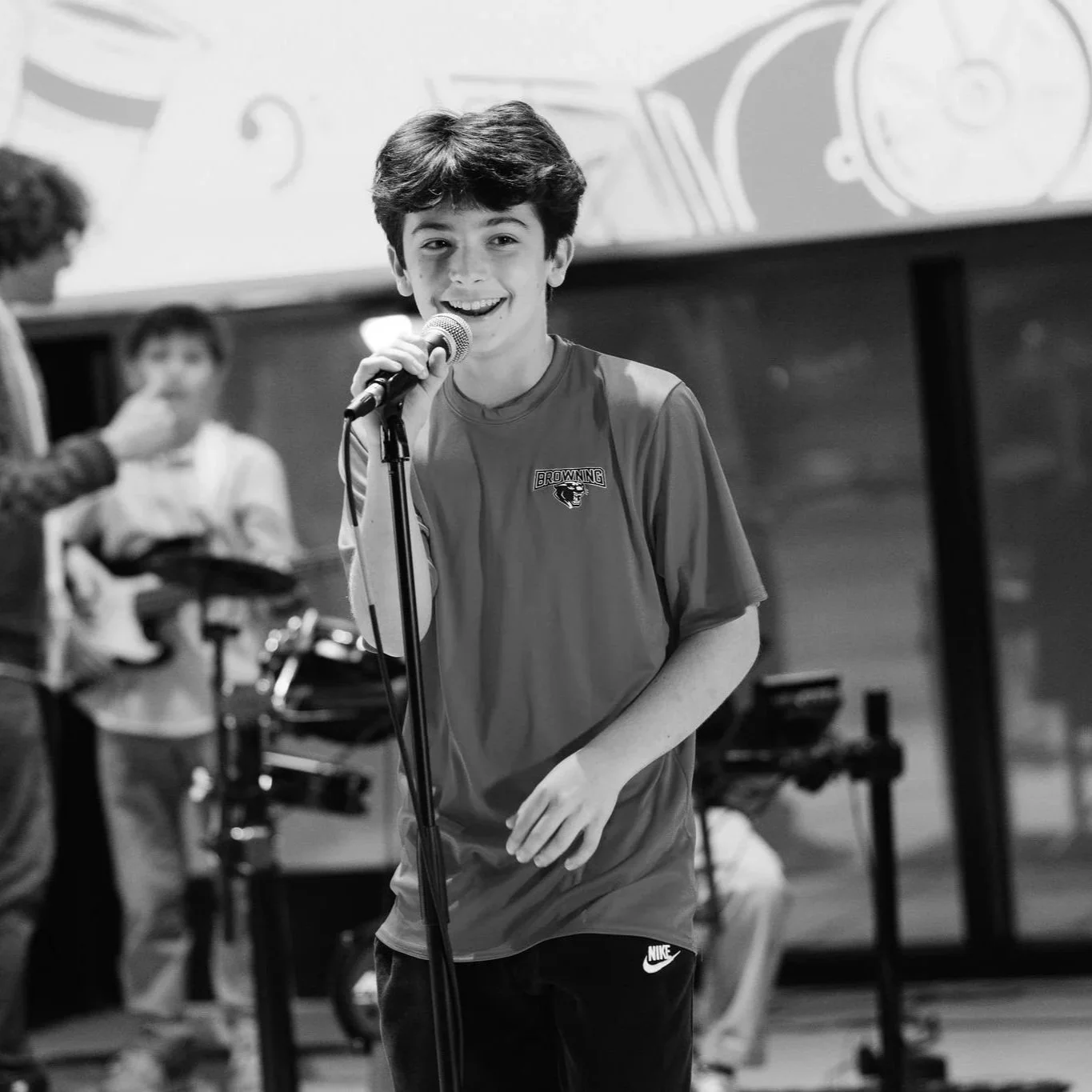
The week prior to the fundraising effort, our Upper School boys hosted an open mic coffeehouse in our community commons for students of all ages. The event was a genuine triumph, from the startling amount of musical talent our students have to the desirability of the community commons at 64 as a venue. Beyond the delightful performances and space, however, what was most notable about the evening was the degree to which the event seemed to “belong” to the boys, with their activity as emcees and stage managers.
In one sense, both of these events were commonplace, in that it’s certainly not unusual for our school (or for many schools) to put together social impact efforts or musical performances. But what interests me here, what ties the events together, is what both the support drive and the coffeehouse program appeared to mean to the boys involved.
About 15 years ago, noted psychologist (and past Browning visiting scholar) Dr. Adam Cox conducted a study for the International Boys School Coalition, entitled Locating Significance in the Lives of Boys. Among Locating’s many provocative findings is Cox’s notion that genuinely transformational education manifests when a teacher or coach helps a boy recognize the sense of potential purpose that is already inherent within the boy himself. As Cox puts it:
Helping boys to hear the call of their own spirit, and encouraging them to act on that voice puts the challenge of 21st century education in its proper perspective. Activating spirit is less a problem of exciting boys to do what others believe are their priorities, than helping boys listen to what already pulls them forward with intensity and vigor.
Seen in this light, the fundraising campaign and coffeehouse were not merely the expected manifestation of a robust co-curricular program; they were also expressions of significance, moments where boys’ potential was actualized not through the assignments of adults, but by way of their own interests and aspirations. Though a fundraiser or a music performance may appear to be everyday occurrences in school life, they are better understood as key developmental needs that, when met, offer boys an authentic way to exercise responsibility and care in the world—locating what Cox would call significance, and what Browning generally refers to as purpose. To see our guys’ energy and conviction in requesting funds, to see their pride and care in creating a platform for artistic expression was to catch boys doing more than simply fulfilling a school obligation or, worse still, pursuing activities simply to round out a performance resume; rather, it was to bear witness to them realizing moments of a healthy journey toward purposeful manhood. These are not ancillary aspects of their development—they are cornerstone elements of it.
We live in a time where we understandably hear a great deal about the inability of boys and men to feel effective, fulfilled, and authentic. We do well, I think, to recognize that the path to efficacy, fulfillment, and authenticity is lined not only with academic credentials and individual accomplishments, but with opportunities to exercise agency, take responsibility, and care for the communities of which one is a part. For boys, these are the building blocks of a healthy manhood, and thus stand as a vital part of a Browning education.