
Understanding How Boys Learn and Grow
This edition of Margin Notes is guest written by Janet Lien, Chief Enrollment and Institutional Initiatives
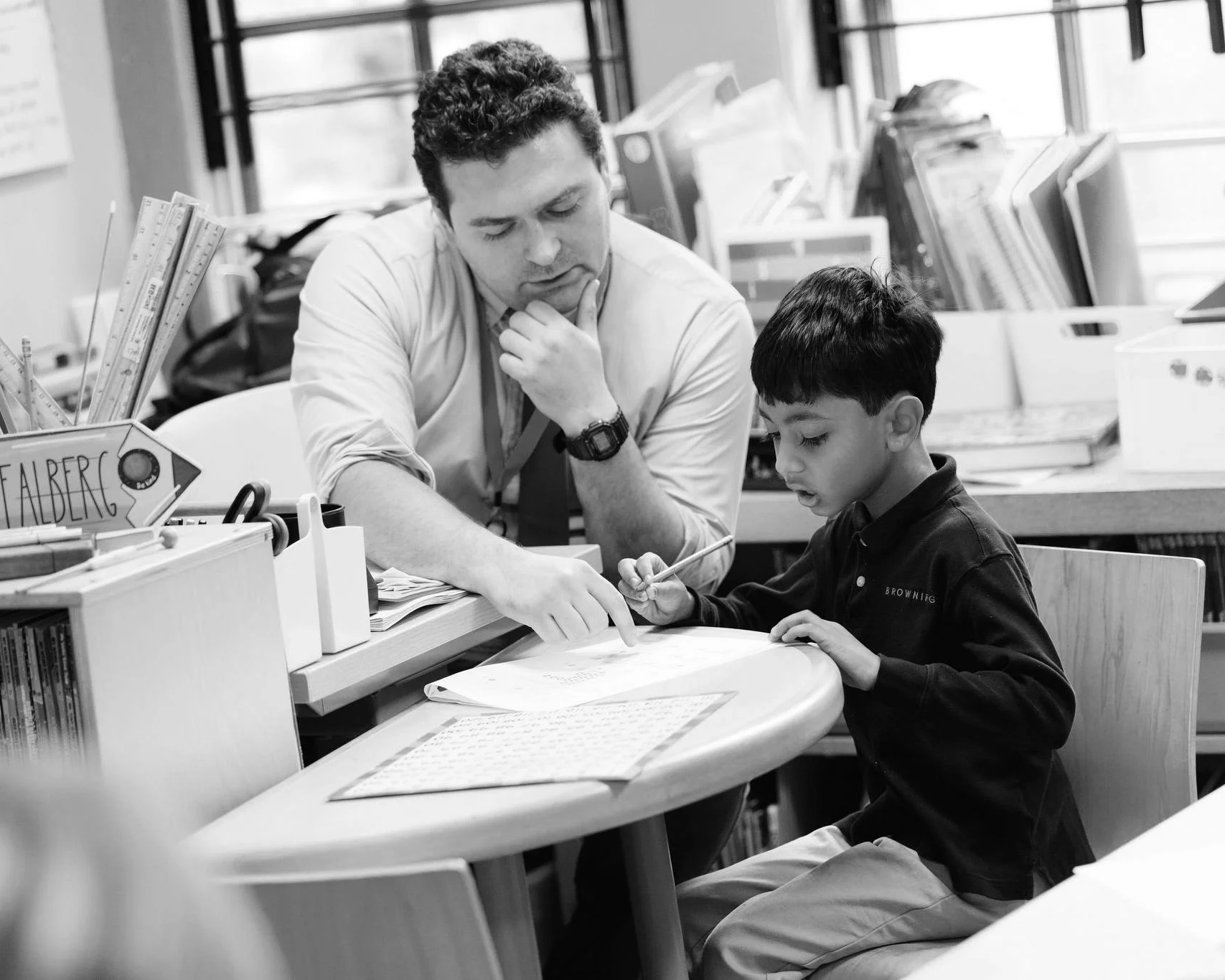
I always tell my friends that teaching at Browning, a boys’ school, made me a better teacher. As a young woman in my late 20s, I arrived at Browning with inflated confidence in my abilities as a science teacher, certain my students would take to me immediately. It wasn’t long before I realized that my tried-and-true classroom strategies were, at best, insipid. The boys were polite and fairly cooperative, but my classroom lacked the spark and joy I had known in earlier teaching experiences.
After some conversations with trusted colleagues, I adjusted my approach. I added more hands-on activities to my classes (including small lab demos the boys could try themselves). I started joining the boys in their games during recess. I visited colleagues’ classes, especially those of teachers who connected with the same group of boys. (The boys thought I was there to observe the teacher. I was, but I was also observing them.)
My experiences echoed what Dr. Michael Reichert and Dr. Richard Hawley learned in a 2013 global study on how to create successful learning experiences for boys. Published by the International Boys’ Schools Coalition (IBSC), its findings were clear: boys are deeply relational learners who are most likely to flourish when they feel known and understood by their teachers. Drs. Reichert and Hawley found that boys’ need for relational connection is often underestimated, even among educators in boys’ schools. Through trial and error, I was learning to use the relational gestures the research described. When my strategies were no longer working, the boys were eliciting the pedagogy they needed from me. Adding more active, hands-on work brought transitive elements into my classes. Seeing the boys at recess and in other classes built a stronger working alliance. Working through conflict built trust and taught me to repair a relationship rupture.
As we continued to incorporate this research into our practices, our teachers could see how it enriched academic experiences for our boys. To ensure that all faculty had access to this wealth of knowledge, we created a journal of relational gestures that paired examples from the research and from my colleagues and me with space for reflection. Our professional learning group for new faculty, Teaching and Learning with Boys, spends dedicated time reflecting on relational gestures in its monthly sessions. This research continues to shape how we work with boys.
And to increase access to research on boys’ education beyond our Red Doors, Browning will launch our Center for Purposeful Boyhood later this academic year. The Center will unite the many ways we engage with research on educating boys, including the foundational work of Drs. Reichert and Hawley. Families who have attended Today’s Boys, Tomorrow’s Men speaker series events, faculty who have taken part in action research, and boys who have met with visitors such as Dr. Joseph Derrick Nelson and Dr. Niobe Way have already encountered this work.
The Center for Purposeful Boyhood marks a new stage for Browning. For the first time, our research, professional learning, and family programming will share a single home and a shared purpose. The Center reflects a lasting institutional commitment to understanding how boys learn and grow, and to sharing what we learn with the broader community. We look forward to celebrating this milestone with the entire Browning community.