
The Adults Boys Need
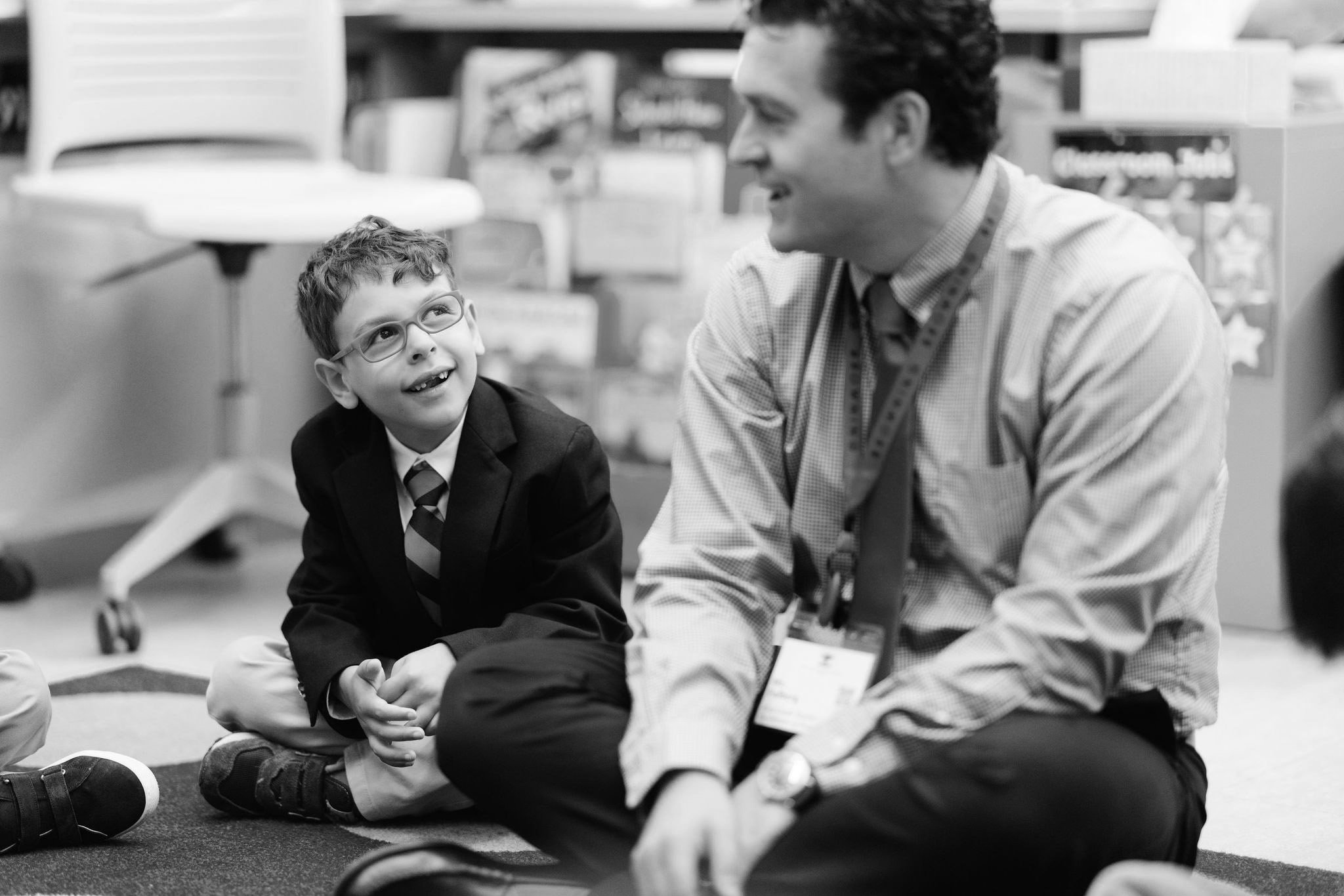
Over the course of three decades, I’ve been profoundly lucky to work with more than my fair share of incredibly talented, committed, and inspirational teachers, coaches, and advisors. Indeed, I’m surrounded by them today, here at Browning. While I enjoy celebrating the skill and the care of my colleagues behind the Red Doors, here I want to reflect on two legendary faculty members from a previous boys’ school.
Beyond working in the same institution, the pair seemed to have little in common. The math teacher was elegantly theoretical and witty, never raised his voice, and smiled with a warmth that both relaxed and reassured. The history teacher was robustly practical and plainspoken, could freeze a boy with his voice, and had an impish grin that enlisted you as a co-conspirator. The former was a published author and counted university presidents as friends; the latter, enshrined in multiple halls of fame as both a player and a coach. Their surfaces suggested Athens and Sparta, Yin and Yang, Mutt and Jeff: Contrary dispositions that one assumed yielded differing ways of educating boys.
But, no. While they shared many personal characteristics—both were deep readers, fanatical ex-athletes, eager raconteurs—their most striking commonality was a relentless commitment to the notion of in loco parentis. They were responsible for the whole child. Their subjects were principally vehicles for developing relationships and cultivating character, which both men took as their most essential purpose.
Most notably, they took their kids seriously—not just as learners, athletes, and artists, but as boys becoming men. They made time for, intently listened to, and steadfastly refused to patronize their boys. Their shared ethos led them to ask questions instead of lecturing; validate feelings as a first step toward moving forward; celebrate the boy’s capabilities rather than their own authority; assure the boy that every part of him—including his choices—mattered in the world; and acknowledge the boy’s agency, while reminding him how much they were rooting for the boy to make a great decision.
“Artificial intelligence is simply no match for the knowledge, values, and sense of belonging that has been passed from mentor to student for millennia.”
This pair consistently offered the respect and recognition boys crave from an admired adult in a way that upheld high standards, promoted order and responsibility, and conveyed the deepest kind of genuine, abiding interpersonal care. They sat with boys when the boys were lonely, and they cheered the boys when the boys thrived. They complimented accomplishments, and helped boys see how something even better could be done. They remembered birthdays, made rules meaningful, wrote recommendations, soothed anxieties, and encouraged excellence. Their students may ultimately have remembered little about the Wilmot Proviso or complementary angles, but a legion of boys become better men because of the loving presence of these two men.
How does this particular way of being a teacher pertain to Browning? First, it reminds us that committed teaching necessitates a desire to look after the whole child. The more we can both show and tell our boys that they are surrounded by an army of adults who are desperate to care for them, the better off our boys will be. Second, as much as Browning exists to prepare students for their next level of academic learning, it is even more framed by the promise of giving boys an experience that will transform their lives. That experience may be intellectual, but it is so often social, emotional, and ethical in character—the very stuff that emerges from an ensemble of relationships with caring adults in the community. Third, and perhaps most important, we simply cannot insist strenuously enough upon the importance of authentic, in-person mentorship for young men, especially in a media environment that has shown its willingness to fill this need with a panoply of bad-faith actors and corrosive messages. Artificial intelligence is simply no match for the knowledge, values, and sense of belonging that has been passed from mentor to student for millennia. The strength of human love and attention—from a math teacher, a history teacher, or any teacher dedicated to a boy—is mighty indeed.
Now, as much as ever, boys need present, versatile, loving mentors who will help them make sense of struggle and success, of vitality and vulnerability, of emotions and ethics, of responsibility and respect. At Browning, happily, they are all around.