
Boys, Friendship, and ‘Stand By Me’
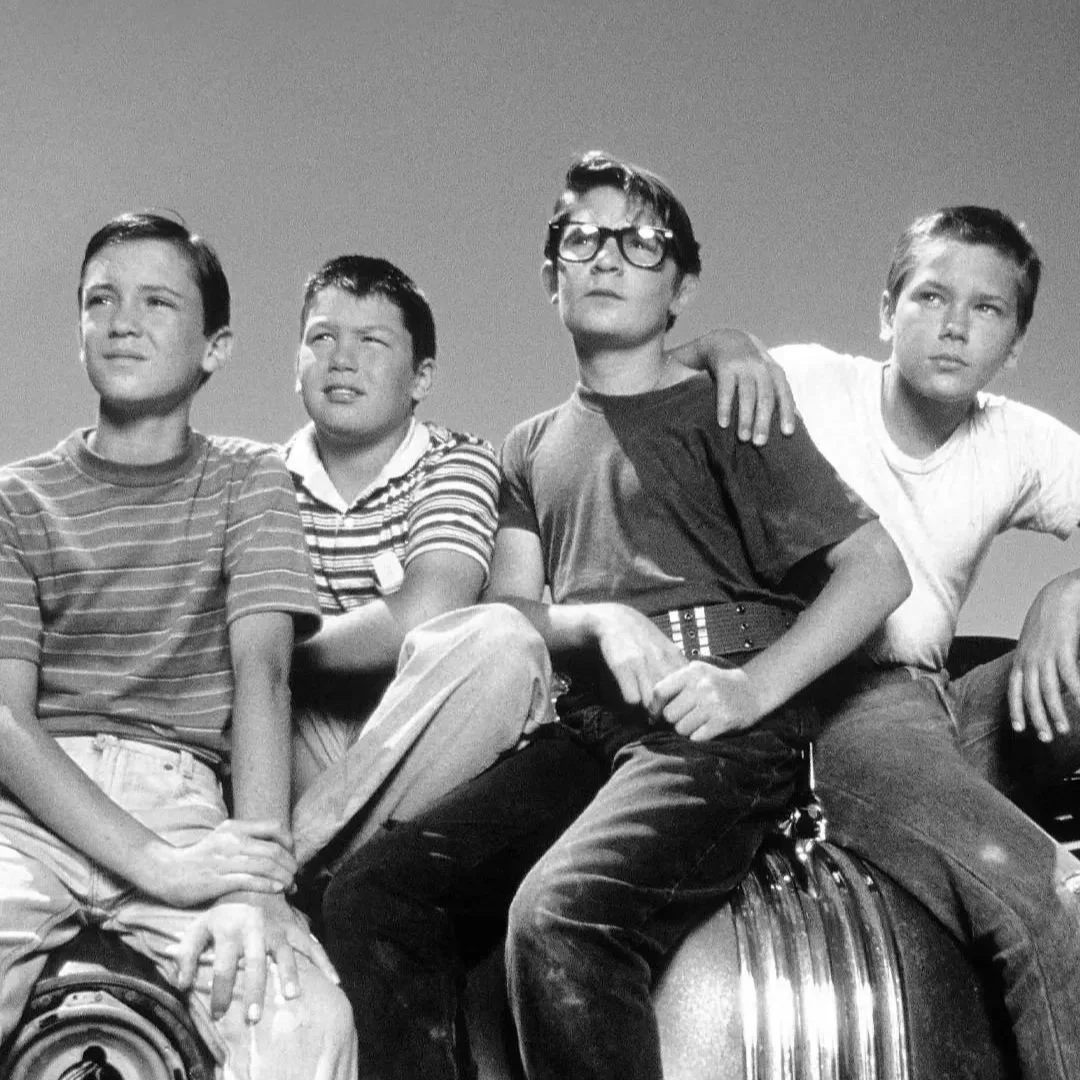
Until the tragic passing of the actor and director Rob Reiner late last year, it had been some time since I had thought about his coming-of-age film, Stand By Me. I loved the movie as a kid, but now I wondered if that was more to do with affinity than the quality of its narrative. After all, when it premiered in 1986, I was a small-town pre-teen about to enter middle school, and a veritable demographic mirror of the film’s protagonists.
To see if the picture held up (or if I was the mere victim of misty-eyed nostalgia), I sat down with my own sons over our winter break for a re-watch.
Set in the late 1950s, Stand By Me follows four almost-adolescent boys on their search for the body of a boy who has gone missing from their small town in Oregon. The protagonists—Gordie, Chris, Teddy, and Vern—are not perfect; indeed, they sneak cigarettes, sometimes curse like sailors, trespass on private property, and occasionally carry their intragroup banter too far. In addition, despite their idyllic small-town setting, the boys don’t seem to have many models of healthy emotional attachment. Nearby adults are, at best, dysfunctional: Gordie’s parents disregard him and clearly favor his older brother, who died tragically in a car accident; Chris’s father fuses absentee parenting with violent alcoholism; a local junkyard owner taunts Teddy because of his dad’s PTSD from World War II. Worse still, the town’s older boys are downright menacing, a crew that exhibits a malignant combination of criminal mischief, emotional nihilism, and tough-guy posturing. In short, none of the foursome appears particularly destined for distinction outside their small town, and that town seems disinclined to nurture them in a meaningful way. A viewer would understand if the boys’ interactions with each other were unthinking imitations of the distant, anti-social, even violent relational approaches that surrounded them.
But what makes their story compelling—and perhaps what I intuited as a younger viewer, but saw more clearly this time—is the quality of their relationships with one another. The movie gives us a group of 12 year-olds whose way of being is not just familiar, but also nuanced and—at bottom—remarkably empathetic. Each of the four is, in his own way, wounded: Gordie feels unseen and unloved by his parents. Babyfaced Vern is insecure and in need of belonging. The edgy Teddy suffers under a physically abusive and emotionally unstable father. Chris sees himself fated to a life of criminality by dint of family heritage. To be sure, Reiner doesn’t oversentimentalize his characters, and sometimes the boys seek to bury their respective hurts under waves of adolescent hijinks, teasing, deflection, and insouciance—but there is never the lasting strut of invulnerability; instead, there is genuine care, sensitivity, and trust. The boys confide their fears in each other. They cry openly in front of each other. They freely believe in and root for each other. Like virtually all 12 year-olds, the boys are uncertain and unfinished and uneven, yet they answer these challenges not with the coldness of the town’s adults or the poisonous aggression exhibited by older boys, but with bonds of genuine affirmation and loyalty. While Stand By Me is notionally about a journey to find a missing boy, we see that Gordie, Chris, Teddy, and Vern are really trying to find themselves in a confusing world, and are counting on their friends to help them in the search.
Now, I’m not a film critic, and I don’t insist that folks set aside other diversions to see a movie that’s four decades old. But I myself am glad I gave it a re-watch, and glad that my boys got to see it, too, for the film offers a truly genuine view of male adolescence. The main characters are at once immature and emotionally deep, alternatingly impulsive and thoughtful, with enormous capacities for joy, doubt, wonder, shame, hope, and fear—they are, that is, realistic representations of pre-teen boys. And, importantly, the movie is subtly hopeful as well. The four boys negotiate the uncertainties and contradictions of their world not by surrendering to a deadening emotional suppression or a defensive antisociability, but through interpersonal connections that offer them the recognition, acceptance, and authenticity that they both need and deserve. Reiner’s film doesn’t sermonize; it simply demonstrates in sharp relief that our boys need not settle for social groups that demand that they posture or keep their most precious emotions to themselves.
“I never had any friends later on like the ones I had when I was 12,” muses the narrator (the adult Gordie) at film’s end. The quiet message in the movie, I think, is that for boys becoming men, it need not be this way—there are alternatives, and we who love our guys should be insisting on the possibility of a healthy, full male friendship that can support and console and encourage as much as it laughs and banters and bonds. That’s certainly what I wish for my own sons; that’s certainly what I wish for any Browning boy.