
Parenting Boys with Care
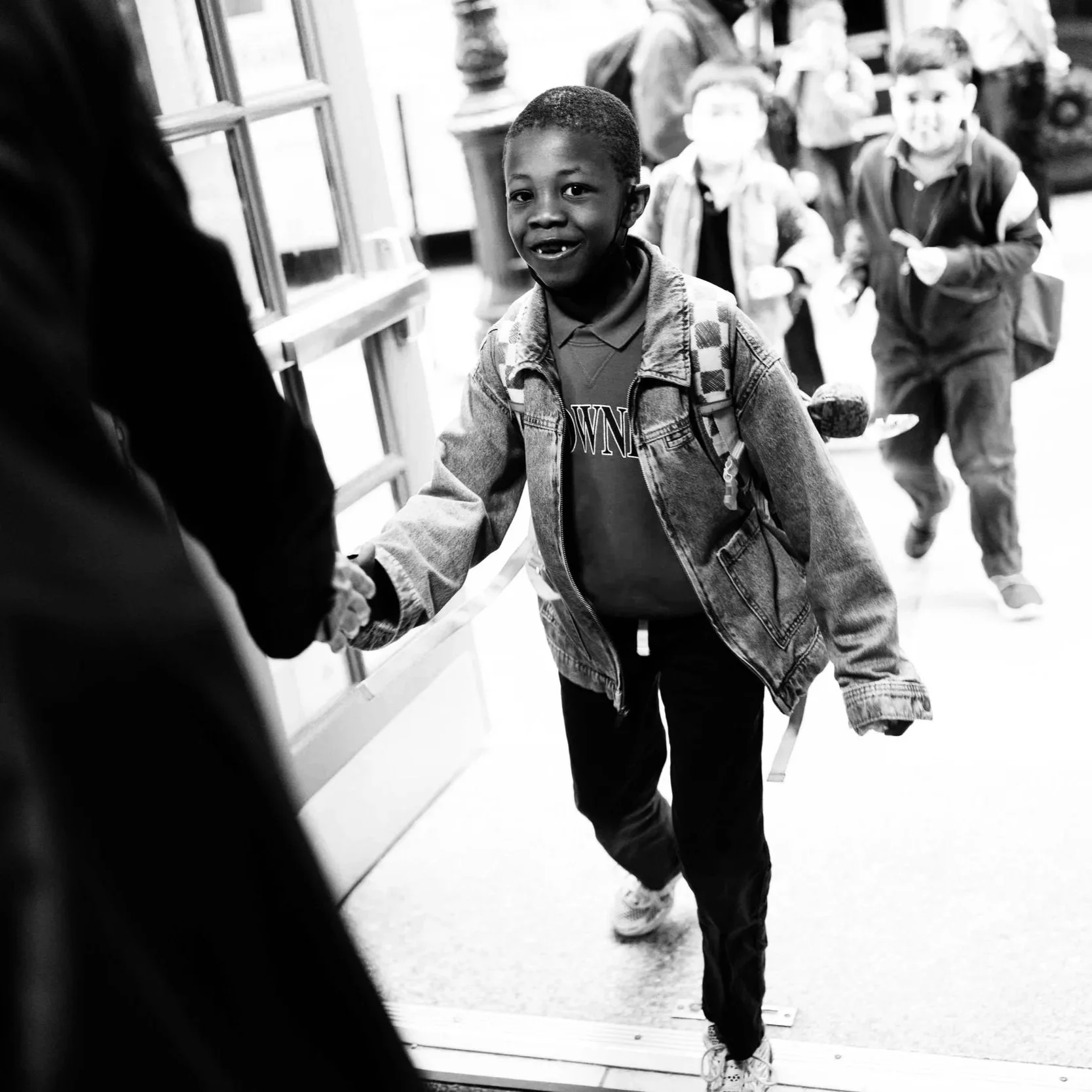
The Peace Corps used to call itself “the toughest job you’ll ever love.” I’m not here to protest the degree of challenge or depth of reward of the organization—but I do want to propose that on both counts, parenting gives the Corps a run for its money.
To be clear, I love being a dad. Now, one absolutely does not need to be a parent to find fulfillment—there are plural paths to a richly meaningful life—but for me, it’s become an indispensable part of my purpose and self-understanding, an unmerited gift that gives form and direction to my days. And because this is true, it is also true that I never stop marveling at how often I feel completely lost in my attempts to be a worthy parent.
This isn’t false modesty. While I believe parenting is joyful, I also believe—and here’s an insight for you—that it’s incredibly hard. It can be exhausting and lonely and deeply, desperately uncertain. You may feel misunderstood or judged by your fellow parents, or your own parents, or your child’s school. You may lose your mind when someone else hurts your kid; you may lose your mind when your kid hurts someone else. You may sense that you’re “behind” everyone else in a parenting race that you didn’t choose—and which actually isn’t a race. You know the anxiety of caring for an infinitely beautiful being while feeling entirely inadequate yourself. And you will surely become intimately familiar with what the writer George Packer calls “the fierce unfairness of love,” as you desperately try to give your child the protection they need while creating space for the independence that their life will demand.
So, at this almost-halfway point between Mother’s Day and Father’s Day, I hope you will indulge me a paean to all the parents in our community. In a world which will quickly tell you how, as a parent, you are failing, how you do not measure up, how you are insufficient, I want to affirm the opposite. Please do not doubt the importance of the model that you are supplying to your boys, and please do not doubt how well you are supplying that model. While no school community is perfect, and while all of us—students and teachers alike—have room to grow, that same growth is very much enabled by the love, intention, and presence from which our boys come and to which they return every day. Put another way, without the foundation of home, Browning simply would not be possible.
And while we may doubt our efficacy in the present moment, especially when our kiddos don’t seem to be hearing or heeding us, research is showing us the lasting influence of foundational parenting, however imperfect that parenting may feel to us. Our boys are learning and profiting from parental company, both in terms of what they are feeling now, but also how they will find confidence and competence in making friends, sustaining relationships, and joining communities in their adult lives. While this may seem an added pressure—“My son’s adult life will be determined by what I give him now!”—I hope we might regard it as cause for hope, for it seems that our kids don’t need our perfection; they need our presence, in its myriad forms: In curiosity about their friends, in shared walks to the supermarket; in goofy sing-a-longs or common sports fandom; in generous listening and caring correction; and in all the small conversations and rituals and affirmations that may be imperfect and limited, but are assuredly essential and loving.
It is not my place—for any number of principled and practical reasons—to instruct anyone else in how to parent. (“Physician, heal thyself.”) But I can and should share my deep appreciation for all the ways in which the parents of the Browning community are loving their boys, and then giving us the chance to build upon that love when those boys are sent into our school’s care. However self-critical we are of our own parenting, and however the world may want to tell us that we’re falling short, from where I sit Browning parents are doing just fine, thank you very much, with the toughest job they’ll ever love.